

El Mohandes Company – Authorized B&D Distributor in Egypt
Picture this: it’s the middle of the shift, the packing line is running at full speed, and suddenly the air pressure drops. Machines slow down, shipments run late, and everyone starts hunting for the cause. At the end of the month, an electricity bill arrives that is higher than expected, with no clear explanation.
Often the problem isn’t the machines themselves. It’s the compressed air system that feeds them. This is where the screw air compressor comes in: the most widely trusted choice for factories that need stable air, continuous operation and energy costs under control.
In this guide we explain, in simple terms, how a screw air compressor works, when it is the right choice for your plant, and how an air receiver tank and a compressed air dryer complete the system so it runs more efficiently and lasts longer.
What Is a Screw Air Compressor?
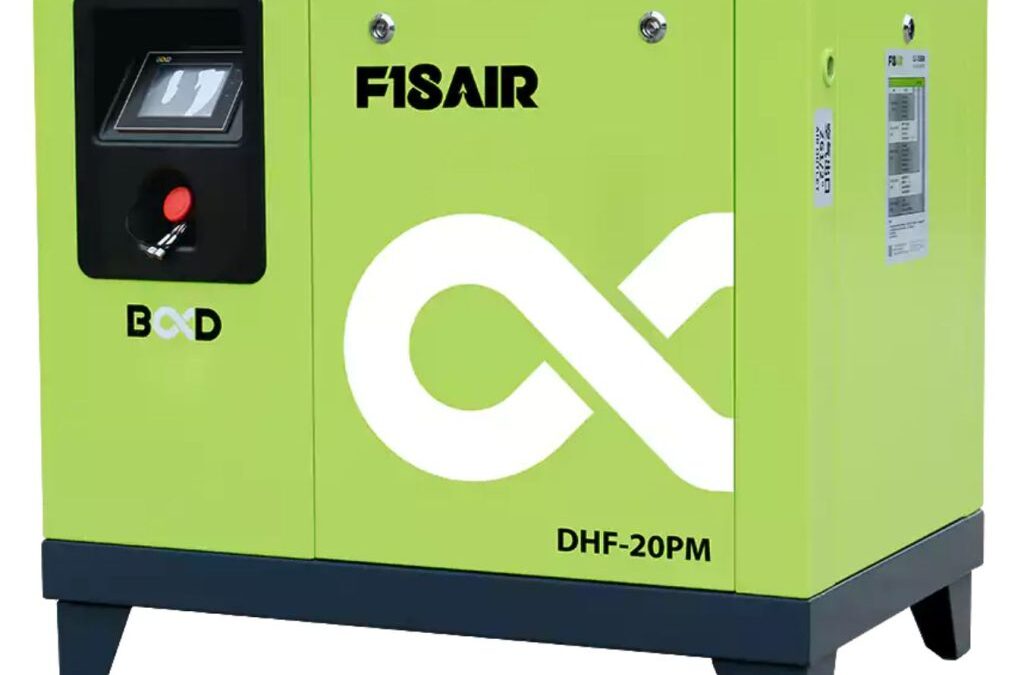
A screw air compressor (also called a rotary screw compressor) compresses air using two meshing rotors inside a compression chamber. Air enters on one side, and as the rotors turn, the space trapped between them gradually shrinks, raising the pressure. The compressed air then leaves into your network as a smooth, continuous flow.
The key difference from a reciprocating (piston) compressor is that a piston unit works with a back-and-forth motion that produces pulsating, intermittent pressure. A screw compressor delivers a steady flow, usually with less vibration and noise.
How Does a Screw Air Compressor Work? Four Stages in a Few Minutes
- Air intake: Ambient air passes through a filter that traps dust before it reaches the compression unit.
- Compression: The two rotors turn in opposite directions, trapping the air and reducing its volume step by step until it reaches the required pressure.
- Cooling and oil separation (oil-injected models): Oil is injected to cool, lubricate and seal the gaps between the rotors, then separated from the compressed air by a dedicated separation system. Oil-free compressors compress the air without injecting oil into the compression chamber.
- Treatment and distribution: The air then passes through the receiver tank, dryer and filters before travelling through the network to your machines.
Why Factories Prefer the Screw Air Compressor
- Continuous supply: Built for long running hours, suited to plants that operate in shifts, according to each model’s specifications.
- Stable pressure: A continuous airflow suited to CNC machines and filling and packaging lines.
- A quieter workplace: Less noise and vibration than piston compressors of comparable capacity.
- Planned maintenance: Fewer moving parts and a clear preventive maintenance schedule reduce the chance of sudden stoppages.
- Higher energy efficiency: Especially with variable speed drive (VSD) technology.
Saving Energy: Where the Real Difference Hides
Electricity is usually the largest share of a compressor’s total cost over its lifetime. So it isn’t enough to ask “How much does the unit cost?” You should also ask: “How much electricity will it use every month?”
This is where a screw compressor with VSD technology and a permanent magnet (PM) motor shows its value. Instead of running the motor at full power and then cycling on and off, it adjusts its speed automatically to your plant’s actual air demand. B&D indicates that electricity savings of up to 30–40% are possible under suitable conditions. The actual result varies from one plant to another depending on the demand pattern, which is why a proper study starts with measuring your real needs.
Types of Screw Compressors
- Variable speed (VSD): Matches air production to actual demand, the best fit when demand changes through the day.
- Permanent magnet (PM) motor: High efficiency in converting electricity into mechanical power, especially at variable loads.
- Two-stage: Splits compression into two stages for higher efficiency in large, long-running applications.
- Oil-free: For applications that cannot tolerate any risk of oil contamination, such as the food and pharmaceutical industries.
| Comparison | Oil-Injected Compressor | Oil-Free Compressor |
| Compression method | Oil injected into the compression chamber | No oil injected into the compression chamber |
| Best suited for | General industry | Food, pharmaceuticals and sensitive applications |
| Air quality | Needs oil separation and treatment depending on the application | Reduces the risk of oil contamination at the source |
Important note: Using an oil-free compressor does not remove the need for filters and dryers. The air still carries dust and moisture that need treatment.
Learn more about the screw air compressors and oil-free compressors that El Mohandes provides.
The Compressor Alone Is Not Enough: A Complete System
Even the best screw air compressor will not deliver its best performance on its own. A successful system rests on three complementary elements:
1) The Compressor Air Receiver Tank
The air receiver tank is not just a storage vessel. It:
- smooths out pressure fluctuations in the network,
- covers peak demand periods,
- reduces load/unload cycling, extending the compressor’s life,
- helps collect part of the moisture before it reaches the rest of the network.
The right tank size depends on the compressor’s flow rate, the operating pressure and the demand pattern. A tank that is too small means unstable pressure; one that is far too large means cost with no benefit.
2) The Compressed Air Dryer
Air carries water vapor, and as it cools inside the network it condenses, corroding pipes, damaging pneumatic tools and spoiling product in some industries. A compressed air dryer protects your investment:
- Refrigerated dryer: The most common type, suited to most general industrial applications.
- Desiccant dryer: Delivers much drier air for sensitive applications.
3) The Filters
Compressed air filters remove dust, oil droplets and oil vapor. In food and packaging, air quality is part of the quality of the final product itself.
How to Choose the Right Screw Compressor for Your Plant
Before comparing prices, prepare answers to these questions:
- How much air do you actually need? (m³/min or CFM)
- What operating pressure is required? Allow for losses in pipes, filters and dryers.
- How many hours a day will the compressor run?
- Is demand constant or variable? If it varies, VSD is a strong option.
- What air quality does your industry require?
- Are you planning to expand in the future?
- What level of technical support and genuine spare parts availability do you need?
Random selection often ends in a unit that is larger than necessary and wastes electricity, or smaller than needed and wears out quickly under overload.
Common Mistakes That Cost Factories Dearly
- Buying a compressor without measuring actual consumption.
- Ignoring the receiver tank, dryer and filters.
- Delaying preventive maintenance and changing filters and oil late.
- Leaving air leaks in the network, which can waste a noticeable share of the air produced.
- Installing the compressor in a poorly ventilated room, which raises its temperature and shortens its life.
Why El Mohandes Company?
We don’t just sell a unit and walk away. We start from your plant:
- Free technical consultation and a study of your real needs: air consumption, required pressure, operating hours and production line characteristics.
- Return on investment (ROI) calculation before you make a purchase decision.
- A complete system design: compressor, tank, dryers, filters and a turnkey compressor room.
- Installation, commissioning and operator training by a specialized technical team.
- 24/7 technical support and fast emergency response, because production downtime means direct financial loss.
- Warranty of up to 18 months with genuine spare parts.
- Coverage across Egypt through our Qalyub and 10th of Ramadan branches.
Learn more about our services and about El Mohandes Company.
Conclusion
The screw air compressor is a dependable choice for plants that need stable compressed air, continuous operation and lower energy costs. But the ideal result comes from a well-designed complete system: the right compressor, a correctly sized tank, and a dryer and filters that protect air quality.
Want to know which compressor suits your plant and how much you could save?
Call our team on 01070133251 (Sunday–Thursday, 9 am – 5 pm), email us at b.d.aircompressor.egypt@gmail.com, or request a free quote now.
Frequently Asked Questions
What is the difference between a screw compressor and a piston compressor?
A screw compressor compresses air continuously using two rotors, giving a steadier and quieter flow. A piston compressor uses a piston moving back and forth inside a cylinder and delivers intermittent pressure, which is why screw units are preferred for long, continuous operation.
Is a screw air compressor suitable for continuous operation?
Yes. Many models are designed to run for long periods according to the manufacturer’s specifications, operating conditions and maintenance schedule.
Does a screw air compressor need an air receiver tank?
Usually yes. The tank provides a temporary reserve and reduces pressure fluctuation. The right size depends on the system design and the compressor’s control method.
What does a compressed air dryer do?
It lowers the water vapor content of compressed air, protecting pipes, pneumatic tools and your product from moisture damage and corrosion.
What is the best screw air compressor for factories?
No single model suits everyone. The best one matches your needs in flow, pressure, operating hours, required air quality and energy efficiency, and our team can help you define it through a free study.
How much electricity can I save by switching to a VSD compressor?
B&D indicates savings of up to 30–40% under suitable conditions, but the actual figure depends on your plant’s air demand pattern, so we measure it with you before you decide
References
1. U.S. Department of Energy – Improving Compressed Air System Performance: Guidance on improving compressed air system efficiency and reducing energy consumption.
2. Compressed Air and Gas Institute (CAGI): Technical standards and performance data for air compressors and compressed air treatment systems.
3. ISO 8573-1 – Compressed Air Quality: Classification of compressed air purity and contaminants.